
Salvage Title + FR-44 in Florida: Which Carriers Will Write You
Find FR-44 Coverage NowWhy Salvage Title Complicates FR-44 Filing in Florida
A salvage title alone shrinks your carrier options to nonstandard insurers and a handful of standard carriers willing to write rebuilt-title vehicles. FR-44 filing narrows the field further — most carriers that insure salvage-title cars don't offer FR-44 certificates, and most FR-44 carriers won't insure salvage titles. You're looking for the intersection of two small circles.
Florida FR-44 requires 100/300/50 liability limits — ten times the bodily injury minimum a standard driver carries. The insurer files the FR-44 certificate electronically with DHSMV, which monitors continuous coverage for three years from your reinstatement date. A single lapse longer than 30 days triggers a suspension notice, and your three-year clock resets to day one.
Salvage-title vehicles complicate this because comprehensive and collision coverage — which most lenders require and most drivers expect — costs significantly more on a rebuilt title. Carriers price the higher claim frequency and total-loss history into the premium. Some refuse physical-damage coverage entirely on salvage titles. If your only coverage option is liability-only, you're still compliant for FR-44 purposes, but you lose collision and comprehensive protection.

Which Florida Carriers Actually Write FR-44 for Salvage-Title Vehicles
The national carriers most Florida drivers recognize — GEICO, State Farm, Progressive — either don't write FR-44 at all or won't insure salvage-title vehicles even if they do. GEICO will quote a rebuilt title in some Florida counties but doesn't offer FR-44 filing. Progressive writes FR-44 in Florida but typically declines salvage and rebuilt titles entirely.
Your real options are regional nonstandard carriers and a small number of national insurers with appetite for both filing types and vehicle histories. Acceptance Insurance writes FR-44 in Florida and accepts rebuilt titles with a satisfactory inspection report. Direct Auto Insurance operates Florida storefronts and writes FR-44 for salvage titles, though rates run $250–$450/month depending on your violation history and county. Infinity Insurance writes both but availability varies by ZIP code — they're stronger in South Florida than the Panhandle.
You may also find coverage through Bristol West, which operates as a Farmers subsidiary and writes high-risk policies including FR-44. They accept rebuilt titles if the vehicle passes a physical inspection and the title shows "rebuilt" status, not active "salvage." If your title still reads "salvage" and the vehicle hasn't been inspected and re-titled as rebuilt, your options shrink to specialty carriers like Safeco or assigned-risk pools, which do not offer FR-44 filing.
This is the filing mistake that costs drivers their reinstatement: they get a quote from a standard carrier that insures rebuilt titles but doesn't file FR-44, assume coverage equals compliance, and discover six months later that DHSMV never received the certificate. The lapse letter arrives, the suspension is reinstated, and the three-year FR-44 period starts over.
What a Rebuilt Title Inspection Requires Before Coverage
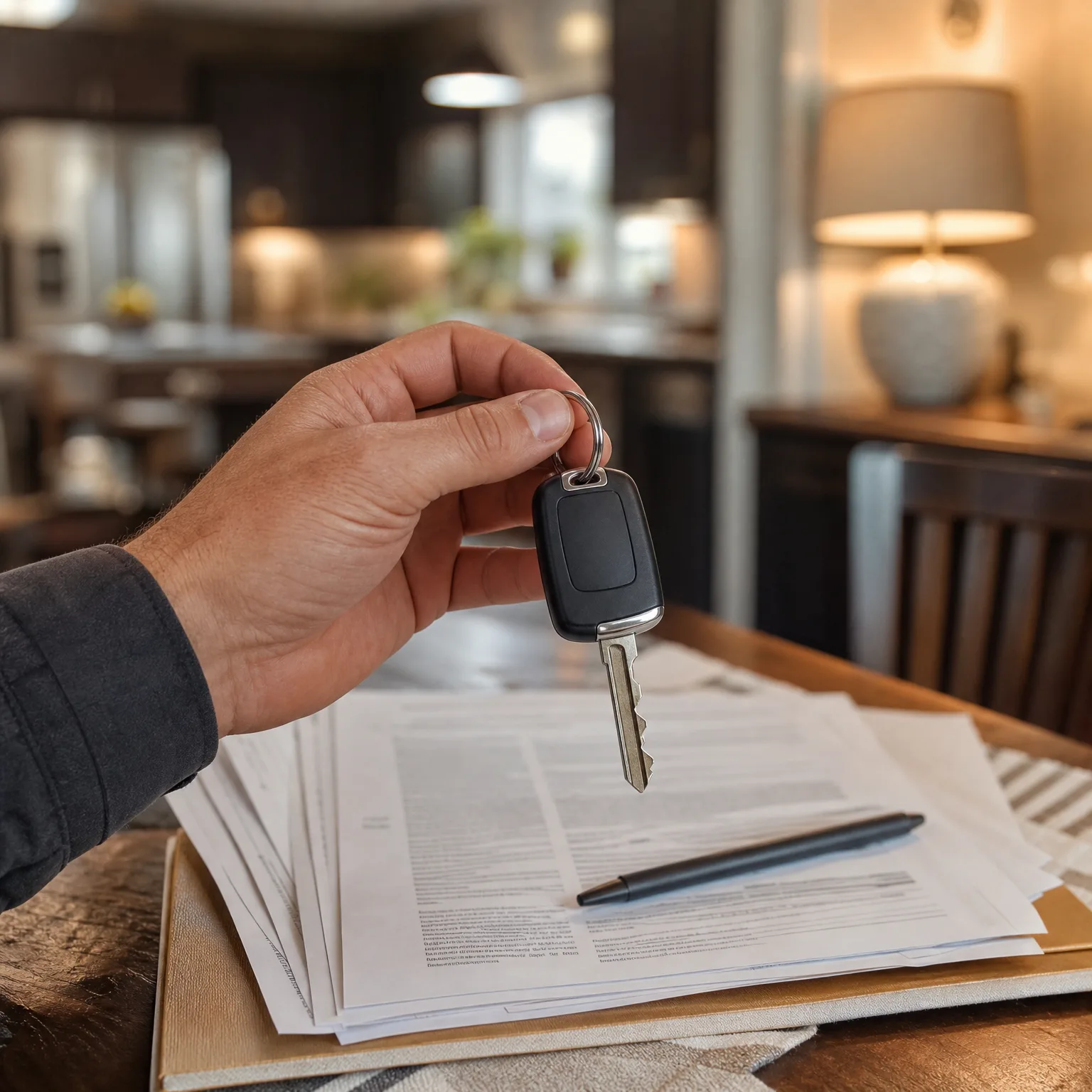
Florida requires a salvage vehicle to pass a physical inspection by a licensed inspector or law enforcement officer before the title can be re-branded as "rebuilt." This inspection confirms the vehicle is roadworthy and matches the VIN and parts documentation you submit. Without a rebuilt title, most carriers — even nonstandard ones willing to write FR-44 — will decline to quote.
The inspection covers frame integrity, airbag function, emissions compliance, and verification that major components weren't stolen. If your vehicle was totaled due to theft recovery or flood damage, expect additional scrutiny. DHSMV charges a $75 salvage inspection fee. Once the vehicle passes, you apply for a rebuilt title, which costs $77.25. The entire process takes 7–14 business days if your paperwork is complete.
Some FR-44 carriers will quote a salvage title if you provide proof the rebuilt title application is in progress, but they won't bind coverage or file the FR-44 certificate until DHSMV issues the rebuilt title. If you're within 30 days of your reinstatement deadline, this timing matters. Start the inspection before you shop for insurance, not after.
How Liability-Only FR-44 Coverage Works on a Salvage Title
If no carrier will write comprehensive and collision coverage on your rebuilt title — or if the premium exceeds what you're willing to pay — you can satisfy FR-44 filing with liability-only coverage. Florida FR-44 requires 100/300/50 bodily injury and property damage limits. The certificate proves you carry those limits, but it doesn't require physical-damage coverage on your own vehicle.
Liability-only FR-44 policies typically cost $150–$300/month for a driver with one DUI conviction and a rebuilt-title vehicle, depending on age, county, and how long ago the conviction occurred. That's roughly half the cost of a full-coverage policy on the same vehicle, and it's often the only option available if your vehicle was flood-damaged or theft-recovered.
The tradeoff: if you're in an at-fault accident, your liability coverage pays the other driver's damages up to your policy limits, but you receive nothing for your own vehicle. If the rebuilt title vehicle is worth $4,000 and you total it, you're out $4,000. For drivers whose salvage-title car is a $2,500 transportation tool rather than a $15,000 asset, liability-only FR-44 is the economical path to reinstatement.
Get Your FR-44 Filed and Get Back to Driving
Find FR-44 Coverage Now
Why Quote Aggregators Fail Salvage-Title FR-44 Drivers
Online quote engines from Insurify, The Zebra, and similar aggregators feed your information to partner carriers, which return quotes if they'll write your risk profile. The problem: these engines don't surface whether a carrier offers FR-44 filing, and they often pre-filter salvage and rebuilt titles out of the results entirely without telling you.
You'll receive quotes from carriers like GEICO or Esurance that show competitive monthly rates but don't offer FR-44 certificates. If you bind that policy assuming FR-44 filing is automatic, DHSMV never receives the certificate, your license remains suspended, and the three-year clock doesn't start. When you discover the error weeks or months later, you've paid premiums for coverage that didn't satisfy your reinstatement requirement.
FR-44 carriers don't participate in most aggregator networks because the filing adds administrative cost and compliance risk these platforms don't support. You're better off calling nonstandard carriers directly — Acceptance, Direct Auto, Infinity, Bristol West — and confirming on the phone that they write both FR-44 and rebuilt titles in your county before you submit an application.

How Lapse Risk Compounds with Salvage-Title FR-44 Policies
DHSMV monitors FR-44 compliance electronically. If your policy lapses for any reason — missed payment, carrier non-renewal, coverage cancellation — the insurer notifies DHSMV within 10 business days. DHSMV mails a suspension notice, and you have 30 days to reinstate coverage and file proof before your license is suspended again. If the lapse exceeds 30 days, your three-year FR-44 period resets to day one.
Salvage-title policies carry higher non-renewal risk than standard policies. Carriers that write rebuilt titles often do so on six-month terms and re-evaluate at renewal based on claims history, payment history, and updated credit. If your carrier non-renews and you can't find replacement FR-44 coverage before the policy expires, you lapse.
This is why binding FR-44 coverage with a carrier that has stable appetite for rebuilt titles matters more than saving $30/month on premium. A $200/month policy with Acceptance that renews reliably is better than a $170/month policy with an insurer that exits the salvage-title market six months later and leaves you scrambling for coverage during your FR-44 period. One lapse resets three years of compliance.
What Non-Owner FR-44 Means If You Sell the Salvage-Title Vehicle
If you sell your rebuilt-title vehicle during your FR-44 filing period — or if it's totaled in an accident and you don't replace it — you still need continuous FR-44 coverage to avoid a lapse. Non-owner FR-44 policies exist for exactly this situation: they provide the required 100/300/50 liability limits and the FR-44 certificate without insuring a specific vehicle.
Non-owner FR-44 costs $50–$125/month in Florida, depending on your violation history and the carrier. It's secondary coverage, meaning it only pays if you drive a vehicle not covered by its owner's policy and cause an accident. It does not cover vehicles you own, rent regularly, or have regular access to. But it satisfies DHSMV's FR-44 requirement and keeps your three-year clock running.
If you're debating whether to repair a salvage-title vehicle or sell it as-is, non-owner FR-44 gives you a compliance path that doesn't depend on vehicle ownership. You maintain your license reinstatement, avoid lapse penalties, and buy time to save for a replacement vehicle without restarting your FR-44 period.
Frequently Asked Questions
Can I get FR-44 insurance in Florida with a salvage title?
Yes, but only from nonstandard carriers like Acceptance, Direct Auto, Infinity, and Bristol West that write both FR-44 certificates and rebuilt-title vehicles. Most standard carriers either don't offer FR-44 or won't insure salvage titles. Your vehicle must have a rebuilt title — not an active salvage title — before most carriers will quote.
Does a rebuilt title cost more for FR-44 insurance in Florida?
Yes. FR-44 policies on rebuilt titles typically cost $250–$450/month for full coverage, compared to $150–$300/month for liability-only. The rebuilt title adds 20–40% to the base premium because carriers price in higher claim frequency and total-loss history.
What happens if my FR-44 carrier won't renew my salvage-title policy?
If your carrier non-renews and you don't bind replacement FR-44 coverage before the policy expires, DHSMV receives a lapse notice within 10 business days. You have 30 days to reinstate coverage and file proof before your license is suspended again. If the lapse exceeds 30 days, your three-year FR-44 period resets to day one.
Can I use liability-only coverage to satisfy FR-44 on a rebuilt title?
Yes. Florida FR-44 requires 100/300/50 liability limits but does not require comprehensive or collision coverage on your vehicle. Liability-only FR-44 policies on rebuilt titles cost $150–$300/month and satisfy DHSMV's filing requirement, though you receive no coverage for damage to your own vehicle.
Will GEICO or Progressive write FR-44 for a rebuilt title in Florida?
No. GEICO will quote rebuilt titles in some Florida counties but does not offer FR-44 filing. Progressive writes FR-44 in Florida but typically declines salvage and rebuilt titles entirely. You need a nonstandard carrier like Acceptance, Direct Auto, or Infinity that writes both.
Related Articles
Find FR-44 Carriers in Florida That Won't Decline You
5/17/2026

Salvage Title + FR-44 Virginia: Rates & Carrier Reality
5/17/2026

Classic Car FR-44 in Florida: Two-Policy Filing Structure
5/17/2026

Non-Renewal Notice in Florida: FR-44 Shopping Window
5/17/2026

FR-44 vs SR-22 Carriers in Florida: Why FR-44 Is Harder
5/17/2026
FR-44 With No Credit History in Florida: What to Know
5/17/2026